Music
Carolina Durante Are Taking Notes But Keeping the Chaos
Inside the rise of Spain’s most electric band.
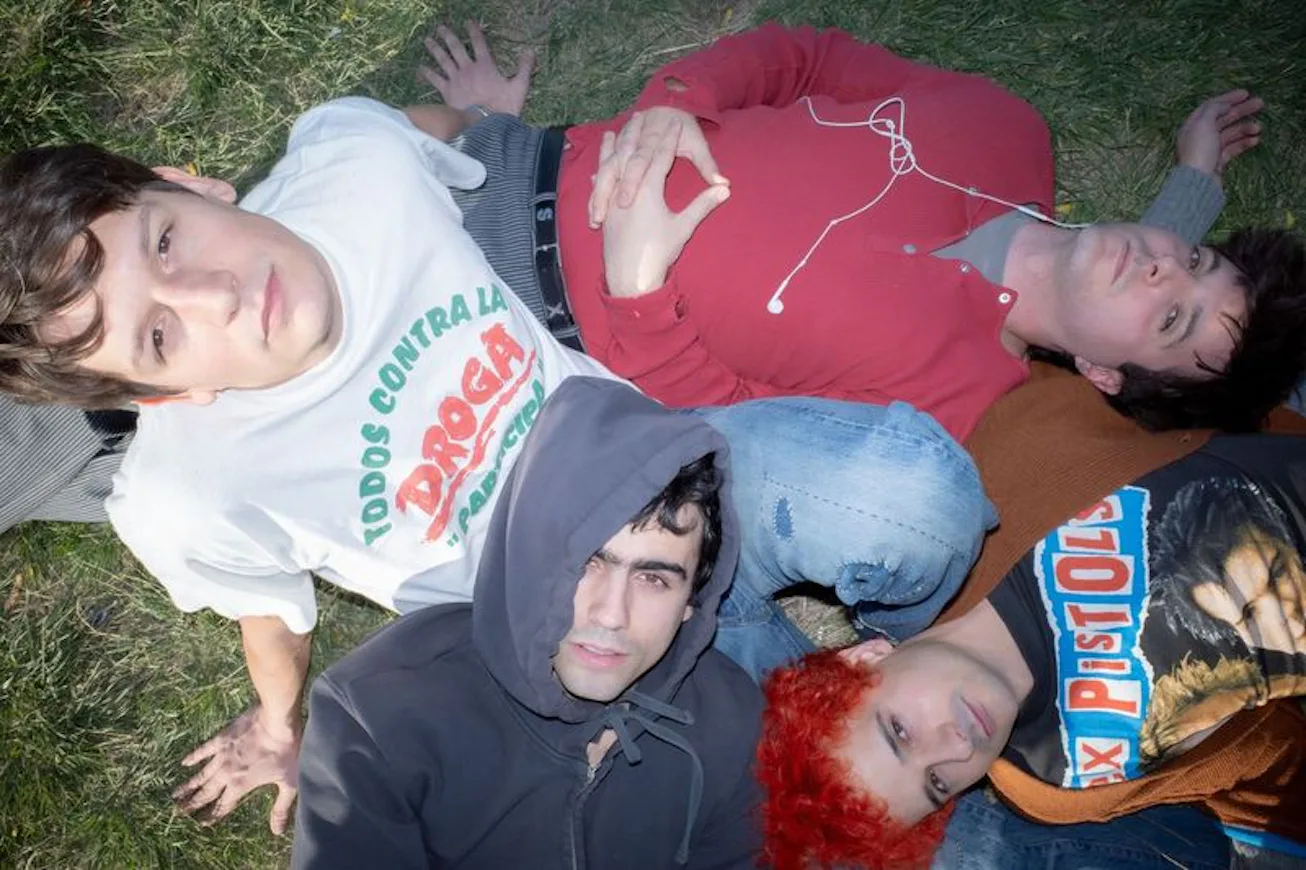
Backstage at Coachella, Carolina Durante are still processing what just happened. The Madrid four-piece — Diego Ibáñez, Martín Vallhonrat, Juan Pedrayes, and Mario del Valle — have just stepped offstage after their first U.S. appearance, and the adrenaline hasn’t quite settled. They’re equal parts energized, surprised, and, in their words, “taking notes.”
Formed in 2017 in Madrid, Carolina Durante quickly carved out a lane that felt both nostalgic and sharply contemporary, drawing from indie rock and post-punk lineage while writing lyrics that read like running thoughts from the current generation. Their breakout single “Cayetano” quickly became an anthem in Spain, while tracks like “La Noche de los Muertos Vivientes” and “Perdona (Ahora Sí Que Sí)” cemented their reputation for turning anxiety, irony, and chaos into something cathartic and communal. Over the past decade, they’ve built a cult following at home, where their shows feel less like concerts and more like collective release — rooms packed wall-to-wall with fans shouting every word back at them.
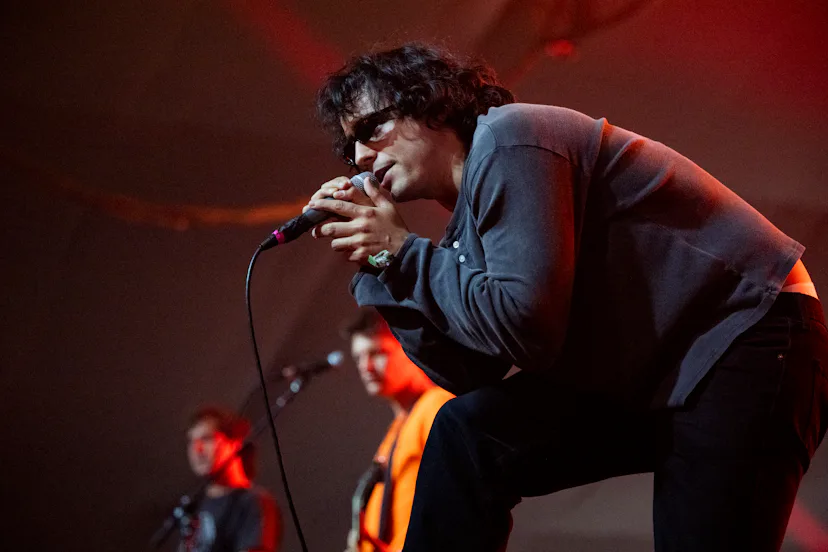
For a group used to the immediacy of Spanish crowds, Coachella felt like an entirely different ecosystem. “We’re not known here,” Vallhonrat says. “So it’s like the first time we meet each other, us and the audience.” That distance changes the feedback loop. Back home, the volume comes as much from the crowd as the band itself. In Indio., the energy is quieter, no less engaged, just more curious.
“You can see people having fun,” adds del Valle. “Dancing, enjoying it — even if they don’t know the songs.”
That’s always been the point. Carolina Durante’s music isn’t dependent on understanding every lyric; it’s about feeling: distortion as emotion, rhythm as release, chaos with just enough control to keep it from unraveling. It’s what’s allowed them to cross borders before they’ve fully crossed markets.
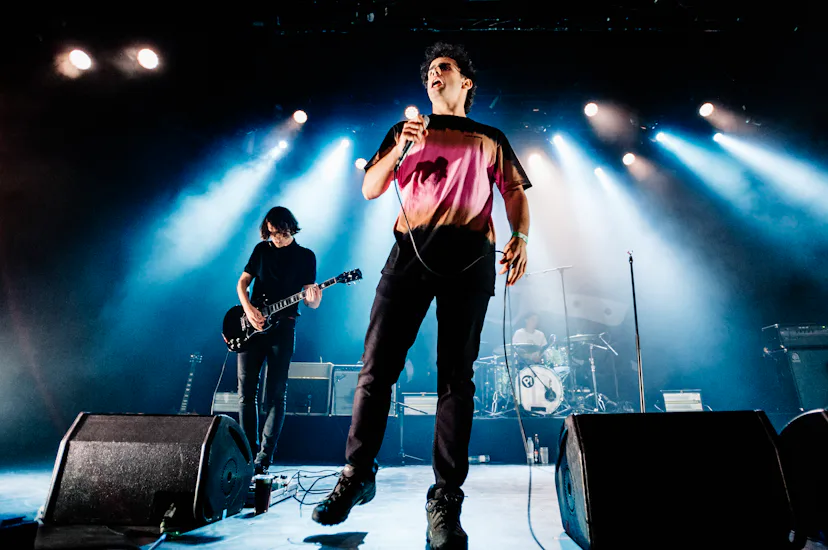
Their rise also lands at a moment when Latin music is dominating globally — but Carolina Durante sit slightly outside the mainstream narrative. Where artists like Rosalía have redefined what global pop can look like, Carolina Durante lean into grit over polish, urgency over perfection. Still, the overlap matters: Rosalía has championed the band, even collaborating with them early on, signaling a kind of cosign that bridges underground credibility and global visibility.
The band spent the weekend watching sets as much as playing them, studying production, sound design, and the architecture of a performance at its highest level. Not to replicate it, but to understand it. They’re not trying to become a different band. If anything, they’re figuring out how to become more themselves — just louder, sharper, and harder to ignore.
Here, the band chats about first impressions of the United States, the learnings from entering mainstream spaces, and why “organized chaos” is still the goal.
How was your Coachella experience? What stood out most to you?
Mario del Valle: It was very fun. Honestly, what surprised us the most was the sound — everything sounds way better than we expected.
Diego Ibáñez: The sound system, how it carries across the space, how clear everything is… it’s kind of amazing. We’ve played a lot of shows, but this feels like a different level, especially for bands. You can really hear every detail and feel the power in production.
This was one of your first major U.S. shows. How did the energy here compare to Spain or Latin America, where you’ve built such a strong following?
Martín Vallhonrat: It’s very different. Here, we’re not really known yet, so it feels like the first time we’re meeting the audience.
Ibáñez: In Spain, people know all the songs and they sing everything, sometimes louder than us. Here, people are more chill. They’re watching, listening, taking it in. Even when we saw...
Del Valle: The Strokes, the crowd was surprisingly quiet. It’s just a different energy — less about shouting along, more about observing.
You’ve built a reputation for having a cultlike fan base. Did stepping onto a stage like this shift how you think about audience connection — especially with a language gap?
Vallhonrat: Of course it’s not the same energy we get in Spain — we’ve been playing there for nine years — but you can still see people having fun. They’re dancing, they’re enjoying it, even if they don’t know the lyrics. That’s always been important to us.
Juan Pedrayes: We expected less of this. You don’t need to understand the language to feel something. It’s like when we listen to English-speaking bands without understanding everything, it still works. So we hope our music translates in the same way.
You mentioned “taking notes” while watching other artists this weekend. What specifically are you paying attention to, and how might that shape what you do next?
Vallhonrat: There will be influence, maybe not directly in the music itself, more in how we present it. We’ve been watching a lot of shows, paying attention to production, sound, visuals. We’re definitely taking notes. It’s inspiring to see how far you can go with a live show. So maybe it won’t change how we write songs, but it will definitely affect how we think about performing them and building an experience around them.
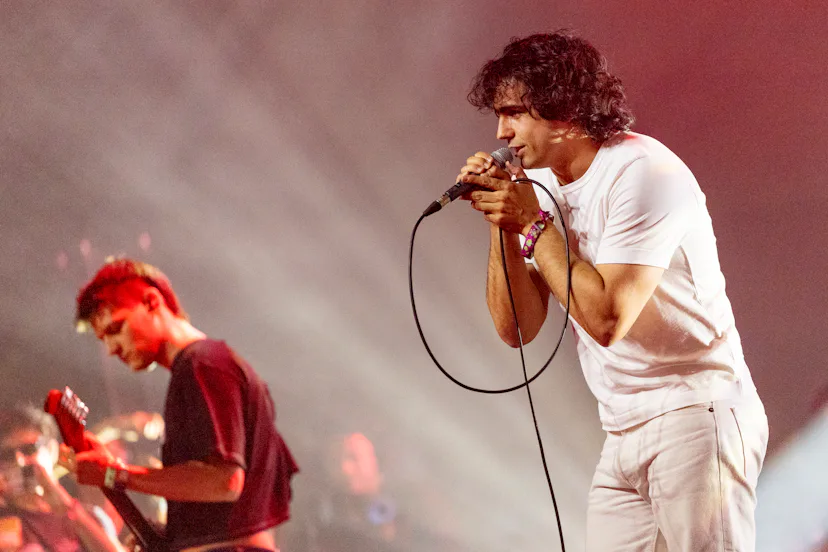
Your music feels chaotic but never accidental. How do you balance that raw energy with intention?
Vallhonrat: We like to keep that chaos. It’s part of who we are — we can’t take it away. But at the same time, it’s not random. We try to control it, shape it. Maybe the best way to describe it is “organized chaos.”
Del Valle: That balance is important to us. We don’t want to lose that energy, but we do want to keep improving how we present it.
Rosalía has been both a collaborator and supporter. Did working alongside someone operating at that scale change your perspective on success without compromise?
Ibáñez: Definitely. More than anything, it’s about taking care of every detail. Not just the music, but everything around it.
Vallhonrat: If you put in that work, people notice. It’s about being genuine, but also being intentional with what you do. That’s something we really believe in.
If you could manifest a future collaboration — something slightly unexpected but still true to your world — who comes to mind?
Del Valle: Mac DeMarco would be great.
Pedrayes: We love him.
Vallhonrat: And of course The Strokes.
Ibáñez: That would be amazing… or Alex G.
Del Valle: We’re not taking many risks with those answers, but they make sense for us. That’s the kind of music that really influenced what we do.
You’ve hinted at new music on the horizon. Where are you in that process right now?
Del Valle: There’s definitely new material on the way. We’re in the final stages, so it’s very exciting.
When you’re building a new project, what matters most to you — the songwriting itself, or how it ultimately exists in the world?
Del Valle: The songs are the most important thing, without them you have nothing. But it’s also about how you present them. We think a lot about the whole package.
Vallhonrat: Someone like Tyler, the Creator talks about taking a year on a song — he takes his time, perfects every detail and when he releases something it feels complete.

Looking back, how do you think this Coachella experience will shape your next era as a band?
Vallhonrat: Maybe not directly in the songs, but definitely in the live show. We’ve been a bit overwhelmed in a good way, by the scale of everything here — the production and the level of detail. We know we can’t replicate that exactly, but it pushes you to think bigger.
Ibáñez: It’s good to compare yourself to the best, just to see what’s possible.
If you could go back to your earliest days as a band in Madrid, what would you tell yourselves?
Vallhonrat: Chill. You’re doing fine.
Pedrayes: And also, very important: Don’t sign everything.
Del Valle: Read things first!
Vallhonrat: Get a lawyer and be smart. That’s real advice. Beyond that, just enjoy it, be free, and trust the process. A lot of things feel very urgent when you’re starting, but you don’t need to rush into everything.
