It Girl
Ravyn Lenae On New Album Blue Island and Life After “Love Me Not”
“Love Me Not” made her a star — but the genre-bending singer is still just getting started.
From one angle, it’s a tale as old as time: An artist spends years developing her talent, distilling her point of view, making connections, and then, as if overnight, a song hits and makes her a star. From another angle, it’s a uniquely 21st-century situation — a uniquely 2020s one, even: A singer puts out a single, someone she’s never met mashes it up with an older classic, kids start dancing to it and living for it on TikTok, and all that makes her famous.
However you see it, “Love Me Not” made Ravyn Lenae a star. In its neo-soul original iteration, the emotionally ambivalent and sonically infectious 2024 track went top five on music charts from the United States to Latvia to New Zealand; when TikTok user “thatsode” combined it with Solange’s hit “Losing You,” the viral new version attracted millions of views. Which is all to say, “Love Me Not” is the kind of moment artists dream of having… and then dread having to deal with.
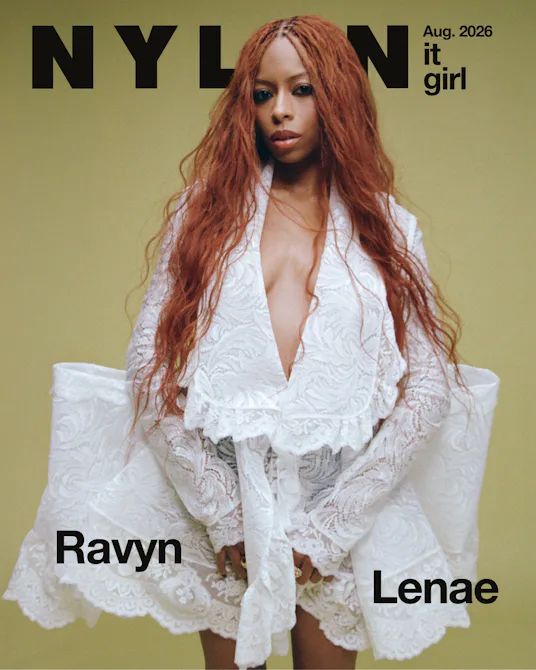
“It was the most exciting moment of my life,” Lenae, 27, tells me one morning this hot, smoky summer. We’re having breakfast at the Public Hotel on New York’s Lower East Side ahead of the release of Blue Island, her eagerly anticipated follow-up to that moment. With its leafy plants and soft chairs, the place would fit right in around her current home of Los Angeles if it had a little more natural light. But Lenae herself fits right in with NYC’s chic brand of grit, her white tank top effortlessly crisp, her hair effectively tousled.
The success of “Love Me Not” confirmed her suspicion that there was a place for her in mainstream pop. “It just felt like you’re floating and like it’s never going to end. Like, I hope it never ends,” she says. But it also confirmed that such a place is tenuous. In the U.S., for much of the summer of 2025, she was the only solo Black woman to have a song in the top 30. “When it started to bubble up, people assumed I was white. And there was a clear switch in how some people received the song once they found out I was Black.”
If the mash-up was modern, so was this: People stopped making up dances in favor of discourse around whether she was Black, and whether she was Black enough. Lenae shut it down in the inevitable TikTok of her own. “You have a very limited view on what Black girls or Black women can be,” she said. “And that’s really unfortunate because I think we can be whatever we want to be.”
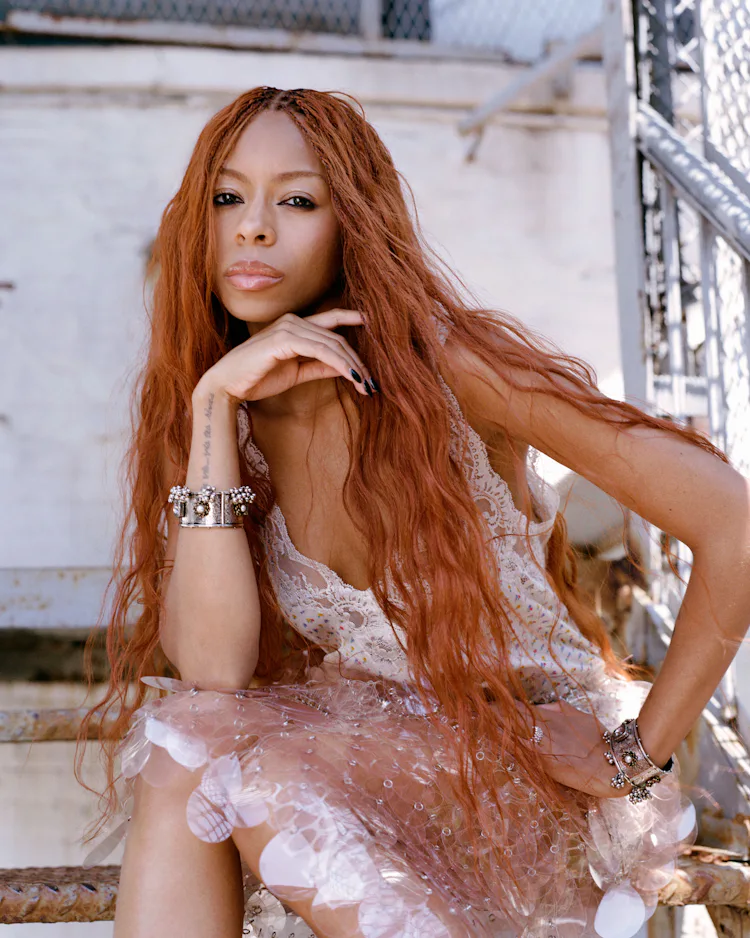
From as far back as she can remember, what Lenae wanted to be was an artist. She grew up on the South Side of Chicago, which she calls “the coolest place to me, growing up. Obviously it’s one of the most segregated cities in the States. But there was a beauty in growing up in such a rich Black culture and going to school with Black kids.”
Her maternal grandfather was a doo-wop singer in Panama before moving to America and becoming a pastor in Chicago; at his church, she began singing in the kids’ choir and learning the guitar and piano. She auditioned into the prestigious Chicago High School for the Arts. “That was my first time going to school with kids from all parts of the city, and that was really important for my development as a person, but also as an artist,” she says. At school, she studied classical music. After school, she sang along to Kaytranada and Flying Lotus tracks on YouTube, trying to figure out where her voice might fit in. On weekends, she sang at open mics. “It was Christina Aguilera’s ‘Beautiful,’ every time. That was my one,” she says with a laugh. “No matter what they say.”
A quick detour into a pop/R&B girl group taught her a lesson. “The dynamics were not great. The guy running the group was… super weird,” she says, carefully. “But I learned how to record myself and stack harmonies and figure out a vocal style for the studio.” Meanwhile, she used a summer program’s stipend money to record a session at the nearby Classick Studios, where Chicago’s new crop of superstars (Chance the Rapper, Noname) were making early moves. Lenae laid down “Greetings,” a shimmering ballad sharpened up by her nonchalantly accomplished vocal lines. She says the owner was so impressed that he gave her the metaphorical keys to the place, offering studio time for life. She spent after-school afternoons there, quickly joining forces with up-and-coming musician and producer Monte Booker and rapper Smino. After less than a year, she had an EP ready, Moon Shoes. “I sent it to every single person in my contact list,” she says, laughing. Labels came calling, SoundCloud tracks began streaming. “I was coming to school, and friends and even teachers knew I was dropping music. That was so f*cking cool to me.” She got booked for bar shows, and — because she was just 16 at the time — her mom had to escort her. “They would put those x’s on my hands,” to signify that she was underage, she says. “It was my life for so long: two x’s.”
Although not that long, really. Noname tapped her to open her tour when Lenae was still in high school. Her mom came to those shows too. “She’d be selling merch for me while on her laptop on the side, making sure she didn’t lose her day job,” she says. “It was really sweet.” Atlantic Records reissued her first EP, then released a follow-up, Midnight Moonlight, in 2017. Compared with her recent work, these EPs sound tentative, a little spare — until you remember she was still young enough to need those x’s on her hands. Next, SZA tapped her to open her epochal Ctrl tour, which Lenae followed with 2018’s Steve Lacy-produced Crush EP. Its breakout single “Sticky” pointed to another style she could adopt with ease, less off-kilter and more in-the-pocket SoCal-inflected electro soul.
And then: silence. Maybe she needed a little time off after so much productivity and touring, so young. Maybe she had an inkling the industry needed some time to figure out what to do with her. But by Hypnos, her 2022 debut album, the arrangements had streamlined into a deft synthesis of the past two decades of R&B. Her voice, meanwhile, had grown from nimble to stunning, with a higher register reminiscent of Minnie Riperton and breath control worthy of Janet Jackson. It should have made her a superstar, but it seemed to attract more respect than fervor. She quickly followed it up with Bird’s Eye, a polyphonic collab with LA’s DJ Dahi, who’d worked with everyone from Kendrick Lamar to Vampire Weekend. “Love Me Not” was a lead single, although not the lead single: She’d decided to double-release the catchy, if slightly risky in its full embrace of soulful indie rock trappings, song alongside the more traditional “Love Is Blind.” “I was scared of my R&B fans getting scared,” she says. “I felt like I had to cushion it a little bit.” The songs came out in May of 2024 without a ton of hoopla until TikTok found it in the fall and, well, we all know the rest.
Lenae always knew having a hit would change things significantly — she’d watched it happen to Noname. For her, it changed everything. “My life changed by the hour,” she says. Streams approached a billion. “All my relationships changed. I broke up with my boyfriend of four years because…” She stops and sighs. “I got busy, and this light bulb of how there was a whole world out there made me realize the ways I might have been suppressing desire.” She doesn’t elaborate, but instead returns to the music. “I didn’t have time for myself. I was just singing “Love Me Not” every-f*cking-where, or in the studio trying to come up with something just as good.”
And, in the end, she did — but, in what has emerged as her typical fashion, it’s another sonic leap. On Aug. 7, Lenae returns with Blue Island, an album chock-full of accomplished songwriting embodying her love for 2000s indie and pop-grunge. “Naturally, for me being an Aquarius, I always just reject what’s expected of me,” she says. And so, instead of another snappy retro-soul ditty, she released “Reputation,” a plush acoustic ballad featuring Dominic Fike, as the single. “I wanted it to have almost a Bon Iver vocal approach, like how Alanis Morissette and Nelly Furtado really loosely stack their vocals. I wanted it to feel like I was in your ear a little bit.” Lenae also wanted to repeat the double release that, eventually, worked so well for Bird’s Eye. But she didn’t want to play it safe. “I asked myself: Am I scared of ‘Reputation’ living on its own? What actually sounds good together?” Her answer was “Bobby,” a strummy swoon of a pop classic the Sundays could have sung, or Camera Obscura, or Olivia Rodrigo. “Making that decision was a big step for me in gaining control over my narrative and being able to defend it confidently.”
“I didn’t have time for myself. I was just singing ‘Love Me Not’ every-f*cking-where, or in the studio trying to come up with something just as good.”
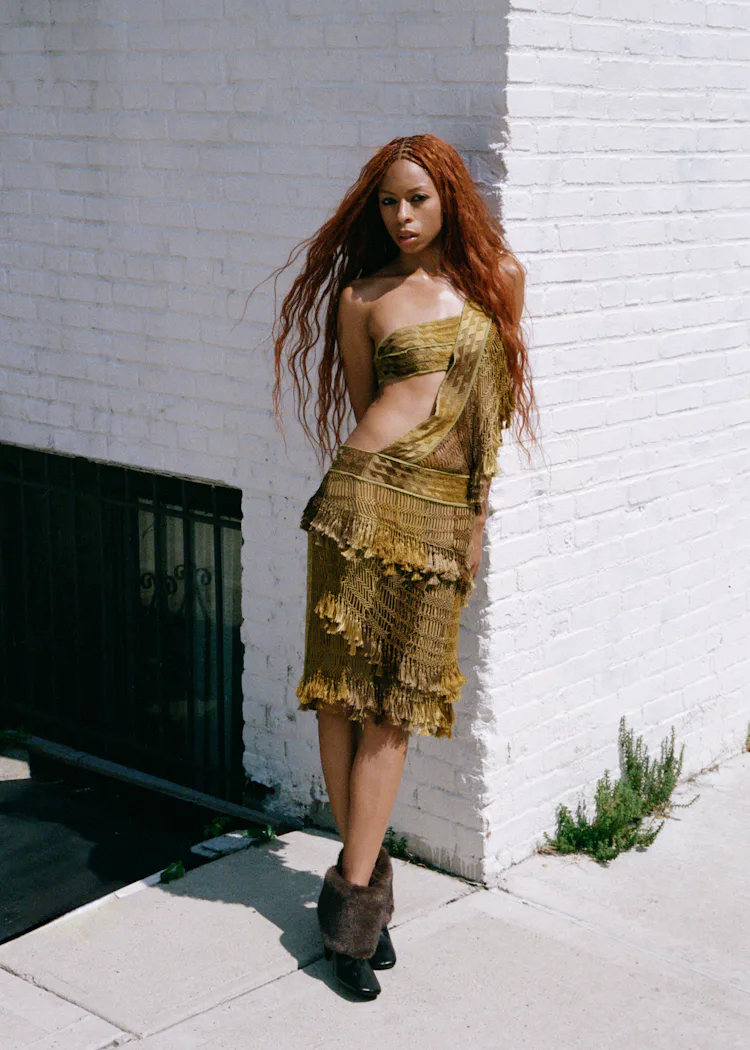
Because, it must be said, this double shot is a double dare to those who didn’t think the comparatively Motown-coded “Love Me Not” was their kind of Black music. “Dahi and I had conversations about being a Black artist who sits in the alternative pop space,” she says. “We need to claim what’s ours. My fans going back and forth with me about using harder guitars or more chanty big hooks, where is that coming from? I’m just gonna say that I hope there are other Black girls watching Kelela, watching Fousheé, watching me, and seeing what’s possible the same way I saw Santigold, you know?”
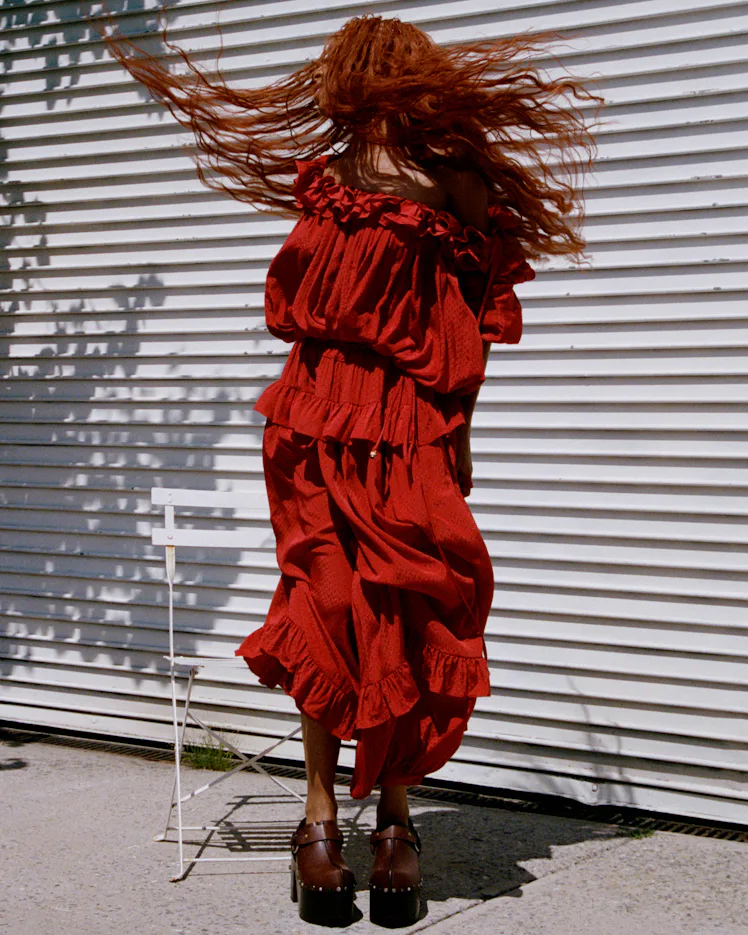
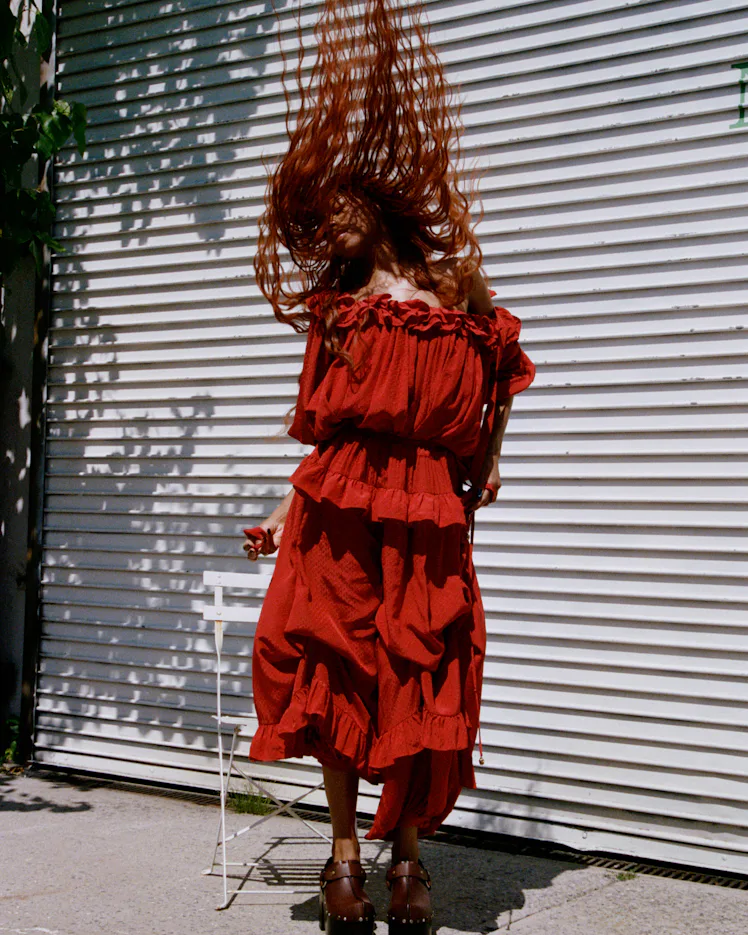
Lenae will give them a chance to hear all this on her upcoming tour. She’s working with choreographer Akira Uchida to bring to life visuals that focus on her particular kind of movement. “I always felt like you had to have this, like, larger-than-life diva persona in choreo,” she says. “But with him there’s something weird and a little creepy about the approach, and I saw myself in that. It allowed me to claim ownership of my body language.” Style-wise, she’s been looking to Donyale Luna, widely considered the first Black supermodel, whose avant-garde approach to modeling shifted ideas around Black femininity in the 1960s. “She was all over my boards. I like when girls feel a little witchy, natural, elegant, and a little gritty. I like when all those things coexist in a girl. And I like big pop hooks with choreo but the glam is a little smudgy. I’m playing with the elements of what pop can look like, especially on a Black girl.”
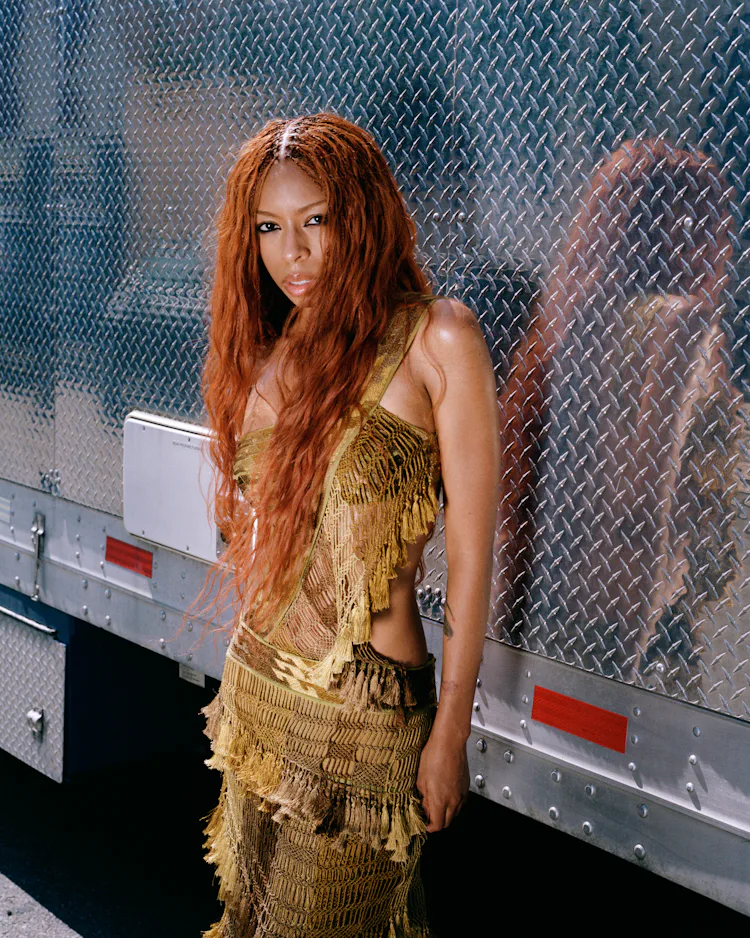
“I like big pop hooks with choreo but the glam is a little smudgy. I’m playing with the elements of what pop can look like, especially on a Black girl.”
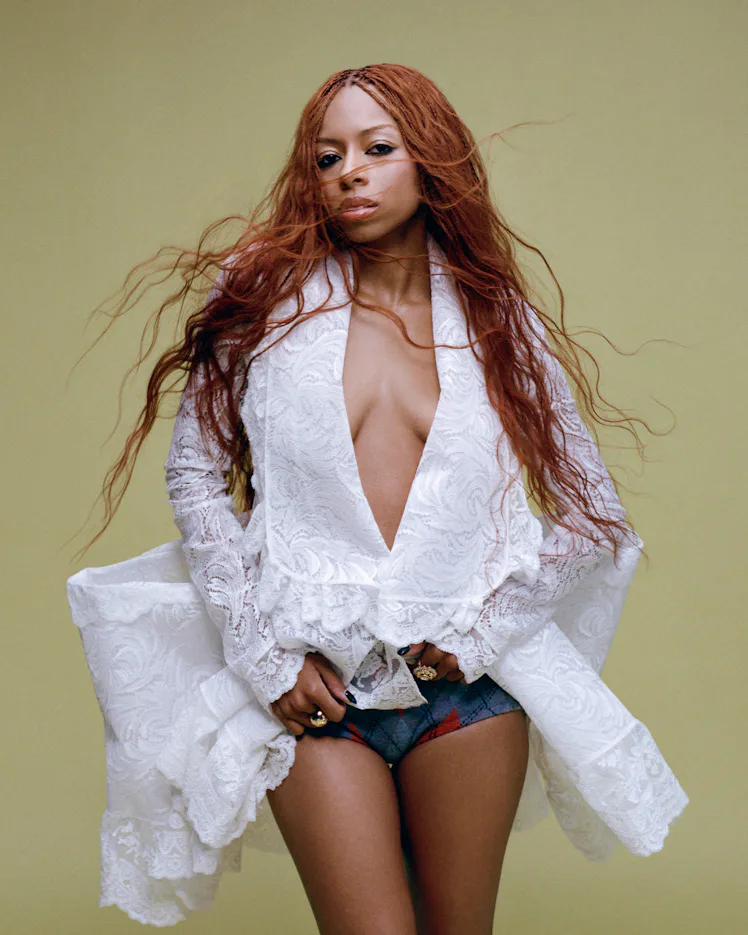
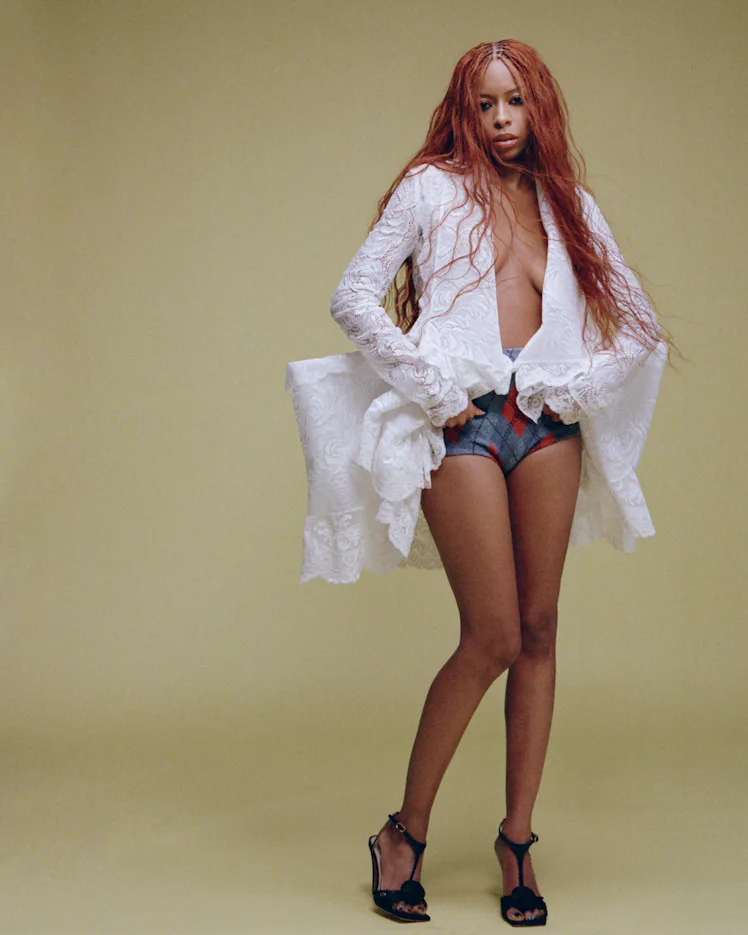
And, of course, what pop can sound like. Blue Island takes its name from a small city just south of Chicago that served as a stop for early traders and immigrants in the late 19th century. “Growing up, we used to always pass through Blue Island to get somewhere else,” she says with a laugh. “We never had dinner there, it was always a place to come from here to there. That did something in my brain because there’s been so much transition for me.” The album itself transitions from the initial guitar-based singles to electro earworms like “Saturday Night,” to Björk-y bangers like “Let Us In,” to swirling, stoned soul joints like “Babygirl,” featuring Doechii. “That’s my girl,” she says. “I love girls you can tell come from somewhere real and grew up around real people.” The song’s hook— “Breaking them walls/Babygirl, why go through the window?/Could never be wrong/Even if you don’t go where everybody goes” — is, Lenae says, the key to where she is now. “I’m opening my chest up and figuring out what I want to get rid of, but also what I want to keep. There’s all this newfound confidence in the changes. There’s dancing, there’s movement.” It’s the sound of a young Black woman manifesting a destiny to sound just like she wants to.
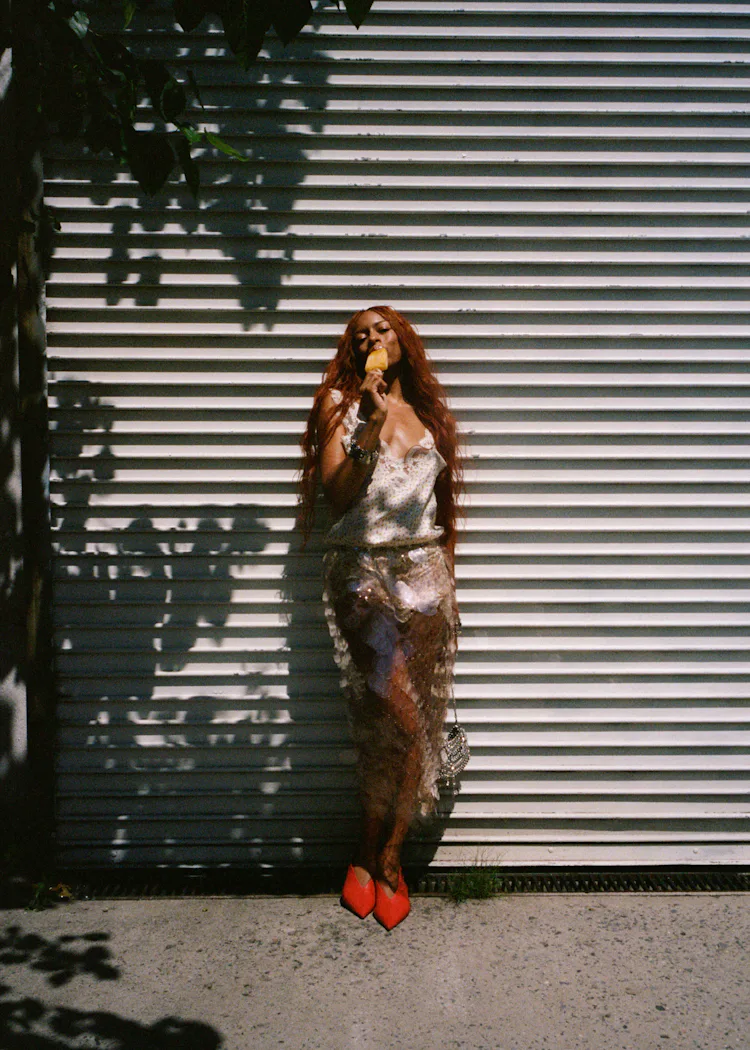
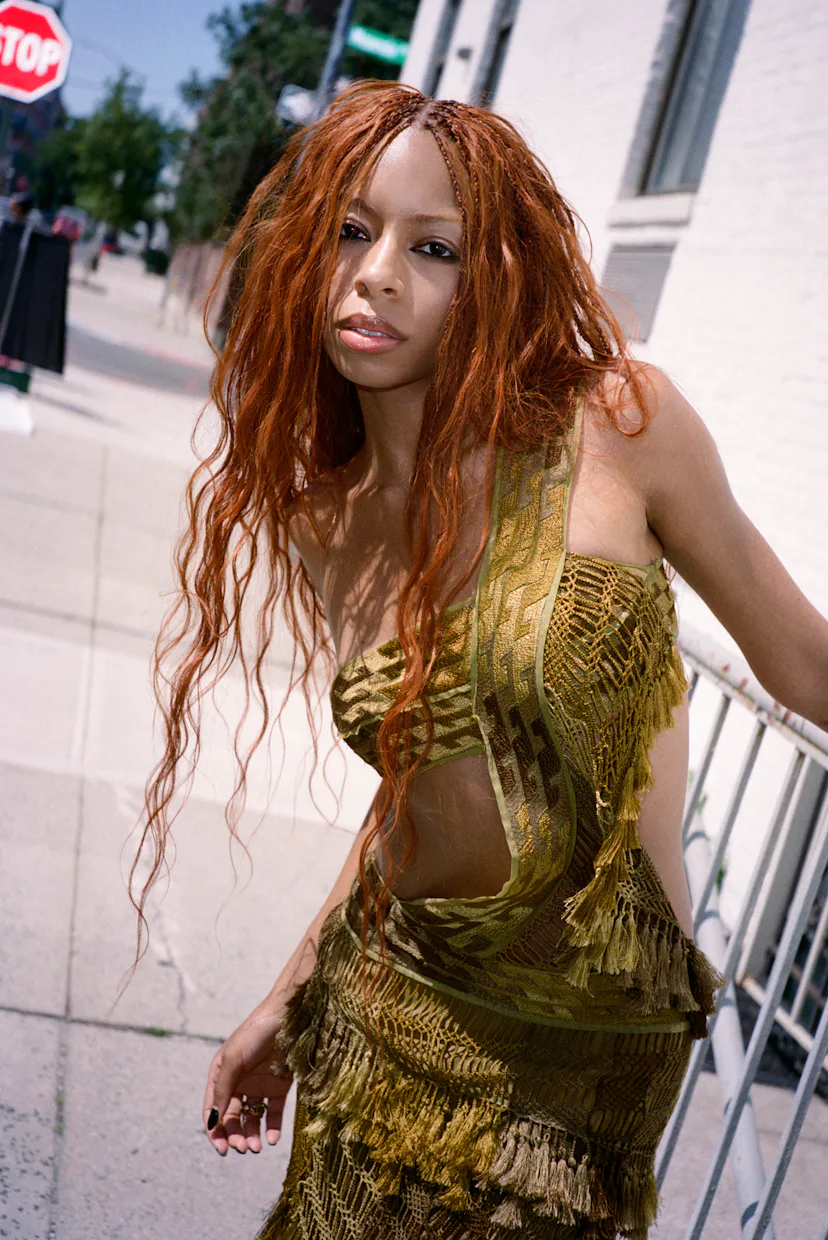
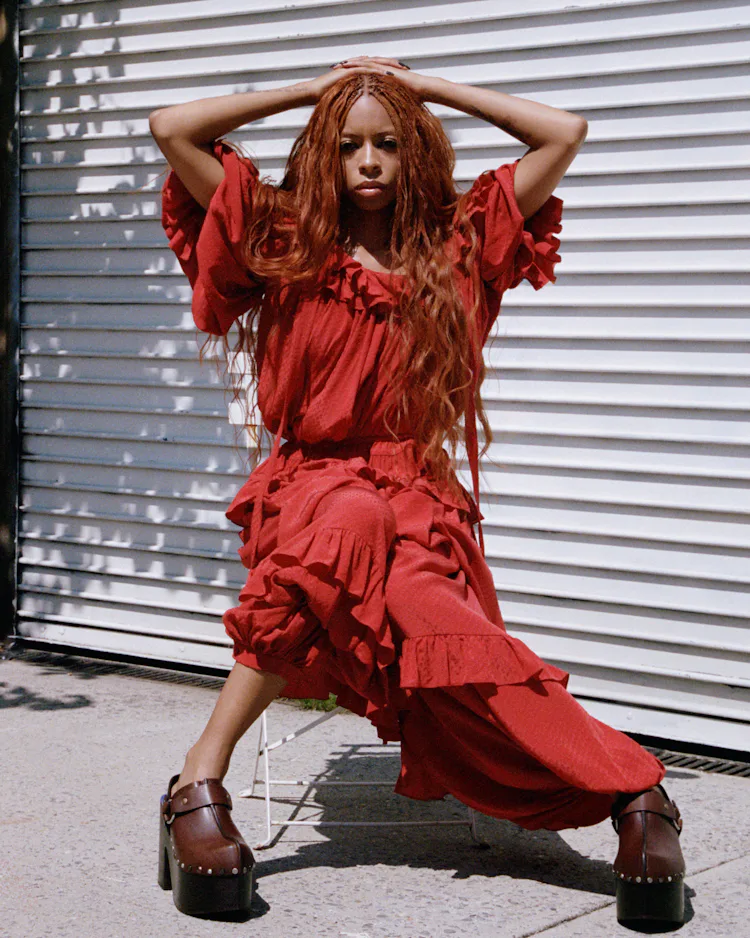
Top image credit: Albright Fashion Library dress; Cartier ring.
Photographer: César Buitrago
Stylist: Calvy Click
Writer: Jesse Dorris
Editor-in-Chief: Lauren McCarthy
Creative Director: Karen Hibbert
Hair: Sergio Estrada
Makeup: Raisa Flowers
Video: Katherine Diermissen
Photo Director: Jackie Ladner
Production: Kiara Brown, Danielle Smit, Cassidy Gill
Fashion Market Director: Jennifer Yee
Fashion: Stephanie Sanchez, Ashirah Curry, Noelia Rojas-West
Features Director: Nolan Feeney
Social Director: Charlie Mock
Talent Bookings: Special Projects
