Life
Looking For Eczema Relief? You’re Not Alone
First diagnosed with eczema as a baby, one woman shares how she got some relief with a nonsteroidal topical cream after years of searching for a treatment to manage her symptoms.
Kristina was compensated for her participation.
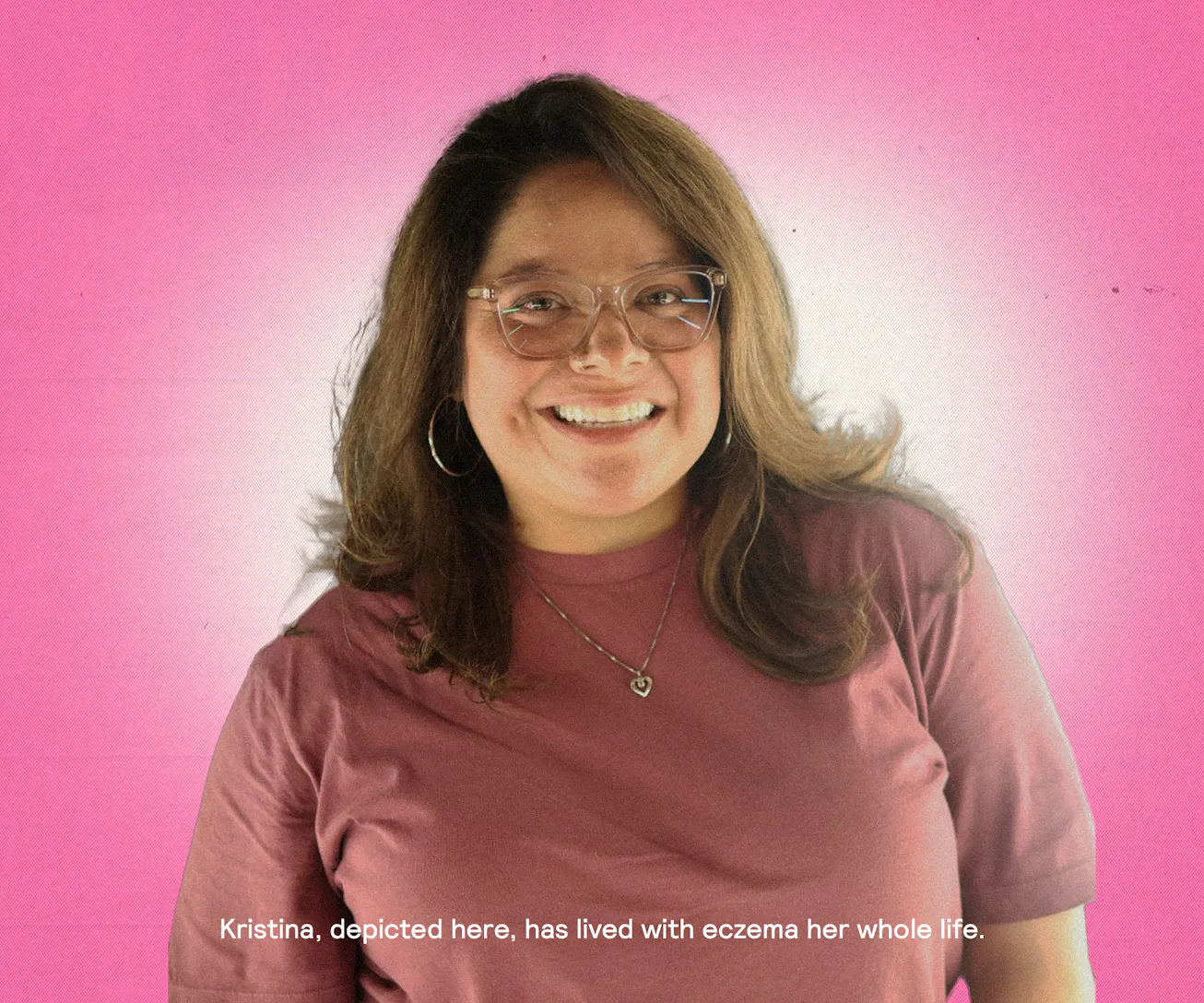
Some people can tell you the day they got a life-changing diagnosis. But Kristina has never known life without atopic dermatitis (AD), the most common form of eczema — a chronic immune-mediated condition in which inflammation damages the skin barrier, leaving it dry, itchy, and irritated.
For Kristina, who was diagnosed as an infant and is now 37, it didn't make a huge difference in her life at first. Her parents adjusted her bathtime routine: They didn't bathe her as often, slathered lotion on her skin, and gently patted her dry instead of rubbing her with a towel — all good habits when you have a baby with eczema.
When Kristina was a little older, her eczema progressed and her parents tried other options to get her condition under control, including steroids, but they brought discomfort and didn’t work for her. “My mom would put on creams that felt like burning," she says. “I remember how much I didn't like it and that I didn't want it on my skin anymore.” Meanwhile, Kristina's skin was constantly itchy and dry, and sometimes she experienced oozing during flares.
Kristina’s symptoms continued to worsen through middle school, and the impact started to take a mental toll. Kristina remembers how she began to dread swimming in her school’s pool. "The chlorine was so strong that my eczema flares just got worse," Kristina says. In high school, Kristina asked her doctor to write a note excusing her from swimming altogether. And on top of affecting her extracurriculars, Kristina was embarrassed to tell others about her eczema or even show her skin, which made getting to know people and dating difficult. "I would cover up the areas as best as I could," she says.
After experiencing these challenges, Kristina was willing to try any medication that could help — and when she was speaking to someone at a conference who told her about a nonsteroidal topical cream, she was intrigued. That's how Kristina learned about OPZELURA® (ruxolitinib) cream 1.5% — a nonsteroidal, twice-daily cream that is FDA-approved for the short-term and non-continuous chronic treatment of mild to moderate eczema in certain people 2 years and older whose disease is not well-controlled with topical prescription therapies or when those therapies are not recommended.


(Reporter’s note: The use of OPZELURA along with therapeutic biologics, other JAK inhibitors, or strong immunosuppressants such as azathioprine or cyclosporine is not recommended. It is not known if OPZELURA is safe and effective in children less than 2 years of age with atopic dermatitis. OPZELURA is not for everyone. It can cause side effects, including serious side effects. See below for IMPORTANT SAFETY INFORMATION, including Boxed Warning for serious infections, increased risk of death, lymphoma and other cancers, major cardiovascular events, and blood clots.)
This medication was different from anything Kristina had tried before. OPZELURA brought her real relief — and it worked faster than she expected. "It helped with the itchiness and the dry skin, and I had less inflammation," she says. "I started noticing relief within a few days.” (Reporter’s note: More than half of patients using OPZELURA saw skin clearance at 8 weeks vs. 15% of those 12+ and 11% of those 2-11 years old not using OPZELURA. In patients 12 and older, OPZELURA has also been proven to significantly reduce itch, with more than half seeing relief at 8 weeks vs. 15% of those not using OPZELURA. Some patients 12+ even saw itch improvement as early as 3 or 4 days. Results may vary.)
So far, OPZELURA has made a substantial difference for Kristina. Not only can she use it without sacrificing her comfort, but it actually helps manage her flares, reducing her itchiness, inflammation, and dry skin. And she can use it as needed — as soon as her flares are under control, she can stop using it, and if they return she can start back up. She can also use it alone, or as a monotherapy, and doesn’t have to combine it with any other eczema treatments. What she’s happiest about: “Not being scared to show my skin off again,” she says.
To see more stories of people with eczema who have experienced relief with OPZELURA, head to MyMomentsOfClarity.com. If you're living with eczema or are caring for someone who is, talking to a dermatologist can help you learn more about options for managing it.


Please see the Full Prescribing Information, including Boxed Warning, and Medication Guide for OPZELURA.
OPZELURA is a registered trademark of Incyte.
© 2026, Incyte. OPZ-2004 10/26
