
Music
Jordan Joy On Her Debut Single, Upcoming EP & Bono’s Reality Checks
The Irish creative finds a very well-timed creative awakening in the aftermath of a life turned upside down.
Jordan Joy’s “coming-of-age” moment is coming later than most. The Irish-born eldest daughter of Bono, who turns 37 on May 10, just released her debut single “Don’t Kill the Vibe” on April 24, marking the start of an exciting new chapter in the creative’s life. “I took the long road, but I'm so glad that I did,” Joy tells NYLON. “I had to grow up to write this music. I'm grateful to be doing it at this time in my life. I think more women should be doing it at different stages in their life.”
Joy is dialing in from her London home, thanks to some ongoing passport complications that have barred her from entering the States for the time being. It’s a cruel irony, considering she wouldn’t even have a music career if she hadn’t left New York City during the pandemic six years ago, but she’s taking it in stride. Besides, she’s got a lot more than just a birthday to celebrate — not only did the single earn her a shout out in our best new music roundup, but she also has an EP in the chamber, and is currently chipping away at her debut album. Needless to say, this next trip around the sun is already looking like the year everything changes.
For her first major feature, we spoke with Joy on all things New York City, her musical background, and her father’s tough-but-necessary reality checks.
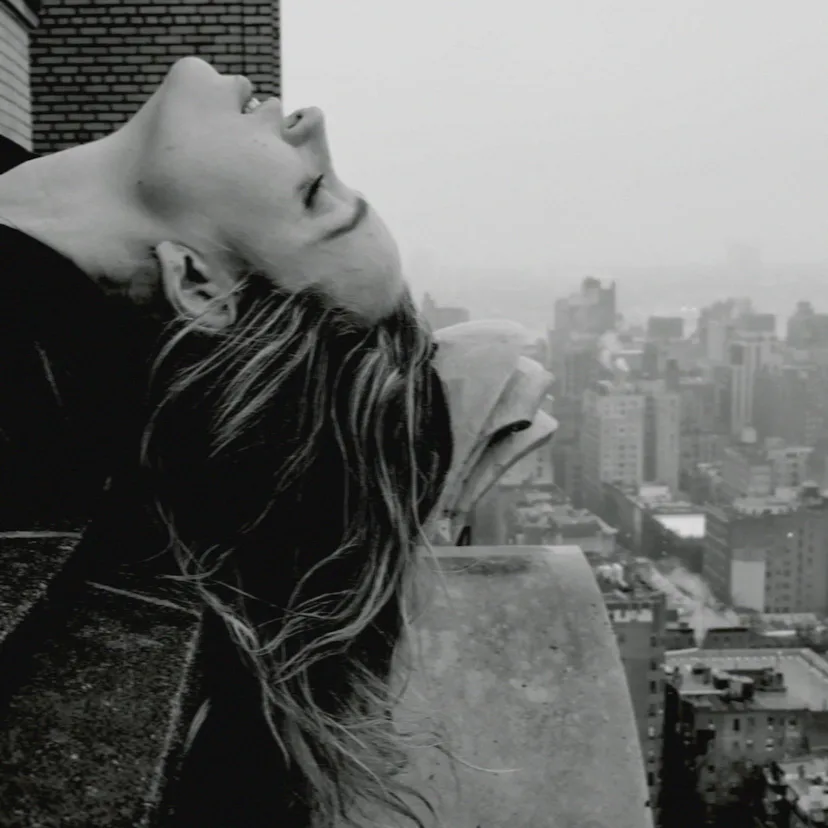
It’s very fitting that these passport issues are all happening right now, because [“Don’t Kill the Vibe”] is about your complicated relationship with New York.
It was a very abrupt ending, my life in New York. I lived there for 11 years. During the pandemic I went home to be with my family during lockdown, and I thought I would be back in eight to 12 weeks. I just packed some sweatpants and thought I would be back shortly, then they closed the border to non-Americans for two years. Even though I was on a visa at the time, you had to quarantine in Mexico or another country for 14 days to get into the US. I lived out of a suitcase for a year and a half. And then, at about 18 months, I was like, "I think I'm going to have to let New York go."
It was interesting because, when I was writing the record, I wasn't really referencing New York deliberately. But then when it was over, I realized a lot of the sonics are references of things I was listening to when I was there, or different artists that are based in New York, like LCD [Soundsystem] or Yeah Yeah Yeahs. It's like my breakup letter to New York and the life that I lived there, because my life did a 180 when I left. It sounds a lot like what I was listening to when I was living there.
Did you end up moving back to New York at all?
No, I live in London now. It's the most stimulating city in the world. It was really a place where I think I discovered my creativity and met it in a different way. I feel very connected to the energy over there.
So you leave New York for 18 months. When did you start writing music?
I grew up playing classical piano, but never really thought about doing it. Then I studied poetry [in college] and went into a social impact job, and I was building this company that was about helping people take action on causes they cared about. We built software that helped people. If you were reading an article about women not being able to go to school in Afghanistan, you could donate to the Malala Fund, for example. Or get registered to vote on another issue, or contact your representative.
It was a very exciting job, but it was very focused. I couldn't really do anything else for the five years that I was doing it. When I left New York during the pandemic, the company was acquired. So many things changed — where I lived, who I was dating, my job — and I started writing music as a way of processing it. I just needed to get back in touch with my creativity after having done that so intensely. [Writing music] opened up this whole new thing for me that I realized had always been waiting there. It took this moment of rupture in my life to come through.

How did you get connected with your collaborators?
Well, I kept it super secret initially. I didn't tell anyone I was writing music for a while. I just really needed to develop it in private on my own and figure out what I was doing with it. Then I started showing it to people, playing with friends. I have a lot of friends who are musicians, which is really lucky. Then I met Jackson [Phillips], who became a good friend and produced the EP, and we created our own flow and our own references for what we were doing. But [this music] happened very organically, in the sense that we would just flow in the studio and we'd go to a local VHS store and find an old film, like Run Lola Run, and put it on mute in the studio.
We actually wrote to a lot of visual material, which was interesting and fun. That inspired a lot of the lyrics as well. That was how it came together — we found a vein together. I like the sound because I think there's a lot of driving melodic hooks, but my voice is quite melancholic, so it balances itself out in a weird way.
Was “Don't Kill the Vibe” the first song that you wrote and finished?
No. That was the last one.
What made you want to put it out first?
I felt it was a good place to start sonically. You could take it anywhere from there. It was an easy open card and the project could define itself from there. But “LED Moon” was the first song we wrote from start to finish together. We got really excited when we wrote that song. That's when we knew we had something interesting or something we liked. It was done over six weeks. It wasn't overthought.
A really important part of the process for me is learning not to overthink things, trusting your creativity and just letting it flow. We didn't spend too much time refining those tracks, we just let them stay like fresh ideas.
You obviously come from a very musical family, but I'd love to hear more about your relationship to music. Were you taking lessons growing up? Who were you listening to as a child? Who are some of your biggest inspirations?
I have a really eclectic taste in music. As a really young kid, I was listening to The Spice Girls. I was really obsessed with Vanessa May, who was a classical violinist. I loved piano. I did think about going to music college for piano, and ultimately didn't. There was a lot of music going on in our house, a lot of different sounds and things.
The first record my godfather gave me was David Bowie's Hunky Dory, and it was the most amazing music I'd ever heard. Then I got really into Pearl Jam. Yeah, I love guitar music. I'm learning the guitar now.
You have more music coming on the way. What can you tell us about that?
The plan is to put out a few more songs in this EP. I'm also writing a record at the moment. I don't know how long that's going to take me, but that's my goal at the moment is to get a full length record together. But we're focusing on songs for now, and just trying to help them find their audience. It's only been a week really that I've had music out in the world, and it's been amazing to see people listening to it. It still [feels] not real, in a way.
Your songs take on a whole other thing once they meet their audience, and that gives the project even more momentum and inspiration. That's been really exciting for me to have feedback and a relationship with the songs that's outside of just myself. I think that will change my writing a lot and help me develop as an artist.
What mindset were you in when you were working on the EP?
I think I was just in “f*ck it” mode a little bit. There's one track on there called “Indigo Girl,” and it's about embracing your eccentricity and your weirdness and just being free in it. It was really just about me opening up and needing more freeness in my imagination. I naturally write darker music that's more alternative. [But] with the mood of things right now, I wanted to do something brighter that encouraged me to feel brighter as well. I'm very mood driven when it comes to music.
What mindset have you been in while working on the record?
I think it's going to be a little more alternative in terms of the lyrics. What I really want to do is do something that feels like it's coming from the feminine and that is imaginative and feels intimate. I want to push the lyrics to a little bit of a weirder place.
Who is the first person you will show a new song to?
I have a few go-tos. One is my cousin, Duncan. He just has a very authentic ear, and he has a good read of where things are coming from energetically. Me and my brother [Elijah] will play music to each other. We trust each other's ears. He's a great sounding board. When you go through the mixing phase, you just go insane because you're just talking about decibels, and he will actually sit there with me and help me talk it through. I'm really grateful that I have him.
The other is one of my best friends that I've grown up with, an amazing Irish artist, Sorcha Richardson. We were roommates together in New York, so she gets all of the context of this record. She is an incredible lyricist and writer, and she knows me through and through.
How have your friends and family reacted to the music so far?
Initially nobody knew I was writing songs, so there was definitely some shock there. But then they were like, "Oh, this makes sense. You actually make more sense as a person now that we see you in this way." That's been really cool. I've felt really supported and encouraged in terms of putting it out there, because it takes a lot to do that. I don't think I could be doing it without my friends backing me.
Has your father offered you any advice or guidance as you navigate the music industry?
He has his own experience, which is so unique. Any [other] artist will never have that experience. But he's good on the reality checks. That has been helpful. But I try to not take any advice, really. They're different experiences and it's coming from a different place. I watched Eli really chart his own course and make his own decisions, and that has worked out for him. The same with my sister [Eve]. I'm doing that for myself now as well. And the industry has changed so much. I don't even know that the industry he was in is the same that it is today. But he comes in with the reality checks, that's for sure. They could be heavy.
What do you hope fans take away from these songs and the EP?
Whether it's this EP or the next one, I really want it to be about breaking free from expectation, doing your own thing, and taking a leap of faith. If people are listening to that on the getaway drive from something they've walked away from or something they're walking towards, that would make me feel really proud of the work. That's the story that I hope to share. I hope that fans might find just a little bit of rebellion maybe in it, too.
This interview has been edited and condensed for clarity.
