Fashion
Edward Cuming Thinks Menswear Should Be Fun
The Madrid-based designer talks about slowing down his process and embracing the basics.
Edward Cuming considers himself a chill person. Despite being over 100 degrees Fahrenheit in Paris when he Zooms in from his showroom, he really is the picture of a calm and collected fashion designer. The words “calm” and “fashion designer” are not usually held in the same phrase, but when you’ve dialed in on what works for you and your eponymous brand over the course of seven years like Cuming has, you reach a certain state of zen. It doesn’t hurt that in recent years, everyone from Ayo Edebiri to Guitarricadelafuente has bought in on his wondrous alchemy.
Cuming, 33, stumbled into fashion in high school, when he was enrolled in an agricultural program and asked if he could switch to any other curriculum. The only other choice: textiles. “It was literal cow sh*t or tulle skirts,” he reminisces with a laugh. But from his very first piece inspired by Tim Burton’s Nightmare Before Christmas, he was enraptured by the endless possibilities that come with a roll of fabric. He studied at Central Saint Martins in London, where his graduate collection earned him orders from boutiques.
Today, the Australian-born, Madrid-based man behind the clothes (who friends refer to as Eddie) considers his clothes to hold the same easy-going vibe as himself. Looking at them, you might be surprised, given his penchant for sequined leg warmers and unusual color combinations. There is a maximalist streak in his collections, with jacquards playing with unfinished hems and randomly sewed-on patches interrupting vibrant contrasting fabrics, but as he tells me, “The brand might not necessarily look like it’s rooted in [classic pieces, but] if you pick it all apart, it is.” The cornerstone of his brand are basics done the Cuming way. He started in 2019 with menswear but eventually expanded to design for both men and women; he says both need each other and that finding the balance between both has informed his designs for both collections. He’s amassed a devoted following with men who shop at places like Departmento in Los Angeles and love to scroll on Ssense, and women who do the same. Cuming presents biannually during men’s week, but feels like the brand sits at a true 50/50 split — the modern playbook for brands that want to be truly unisex.
Here, Cuming talks how dressing for men and women both can (and cannot) be interchangeable, growing a brand, and how referencing one’s self is the most important mood board you could ever put together.
How have you felt about the steady growth of your brand, and how important has it been for you to do it on your own terms?
Steady growth has been important for me. From the moment I took on the first production, I felt a big responsibility to do it right, make the clothes properly, deliver on time, and make sure everyone contributing to what I was doing was being given the attention they needed. My priority was building those foundations for how a business would run, as opposed to what the brand really meant. I felt like whatever I had developed while at CSM was strong enough to resonate already with consumers and a few people in the industry. That already felt like such a big deal to me. Maybe it wasn’t as big as some other brands, but on a very small scale, it already felt like that for me.
So I was like, well, we’ve got to take that and set us all up for this to be able to keep going. I was more interested in quietly building a business that made sense and not the other way around. I think sometimes businesses are built before there’s really anything there or even a need for it or a market. I don’t know what the right approach is. I don’t think there is one. I think the other way can work for some people. I think it’s also about personality. I’m really, really strict with myself to have balance in my life and not lose sight of all of those things outside of fashion or work that I do need to be able to keep going. I guess it wasn’t a strategic decision, it’s just kind of who I am, I suppose.
I love that jeans have become a cornerstone of your offering. Where did the love for denim come from, and why was it so important for you to have that as a tentpole?
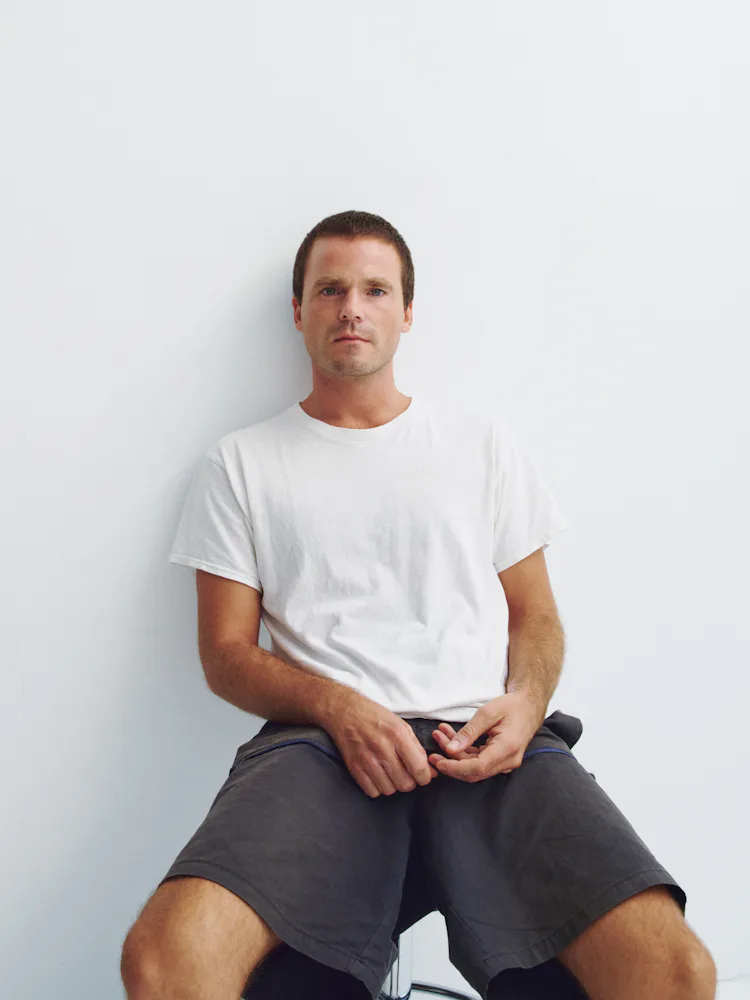
Many of the things I was doing, whether it be a top, shirt, or a dress, always looked really great with a pair of jeans. The stylist I’ve worked with forever [Patricia Villirillo] and I have a real obsession with classic clothes, even though the brand might not necessarily look like it’s rooted in that. If you really pick it all apart, though, it is. I love polo shirts. I love simple button-downs. I really love a tailored trouser. It’s really built on, for want of a better term, essentials. With jeans, early on, it was like, we need to make that happen because it’s going to allow us to play with the high and the low and the loud and the quiet and play with those contrasts. It’s such a big part of how we style the collections, and how we see the brand as a team. When the idea came for using the name and having it be punchy and fun — but not falling into a really obvious visual root of what that could be — that was really exciting as well. And it just hit off.
You have such a love for texture and colors and that might be difficult for some people to wear, but there is an ease to the clothes themselves. It does come down to great basics.
There’s pieces every season we try to push, even with complicated fabrications. We try to work on draping, or something like a complicated skirt. We push ourselves, and sometimes it works and sometimes it doesn’t. That’s what I like about any given season, is that we can take a risk with maybe the image or look, and it’ll land for some people. Some people are like, “What the hell is that? And where did that come from? Stay in your lane.” But I don’t care. I think that’s the only way to live. Why not do that? Everything can feel so edited nowadays, and so merchandised and perfect. There’s such prescriptiveness in what taste is. Sometimes, you start to wonder: What even is your own taste? And why don’t I stick a massive stick in that for a season and go against it? It’s the only way to move forward, because then you become complacent. It’s like fashion school 101, but it really works. It’s important to keep it fresh for yourself in that way.
I was listening to Charli xcx in her Rolling Stone interview talk about how her albums are responses to each other, like magnets pushing each other the opposite way. A great designer should hold that ethos to be true: to have the essence of who they are, then realize that going a completely different way is what they need.
It’s also about the confidence, faith, and trust in yourself to know that no matter what you tackle, as long as you’re doing it and doing it from an honest place, it’s going to come out looking like you no matter what. As long as you are in tune with who you are as a creative person, you can’t really avoid it. This season specifically, I was saying, “This is a chilled season. Visually, it’s calm.” I was really trying to make myself do something calm. There are so many textures and all these wonderful fabrics. There are calm elements, but then they looked at the rail and they were like, “What the f*ck? That is not calm.” Water finds its own level somehow, but then you push yourself somewhere new in that process.
Fabric is super important, but also the color play. Tell me about challenging yourself with color combinations.
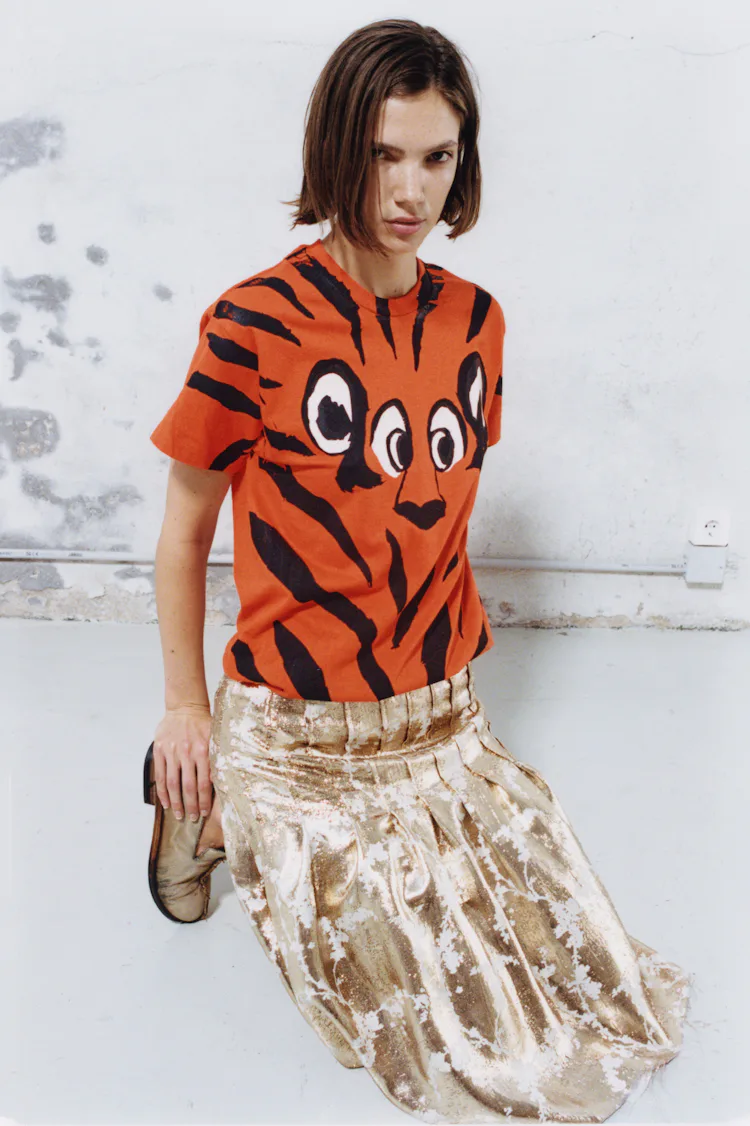
In a similar way to Ms. Charli xcx, we are reacting to what we’ve done before. We’re so hands-on in the studio with these collections. It’s not like it’s a month of launching and then we forget about it for six weeks and then it all arrives, then you style it and it’s done. It’s a very slow process. When we fill the studio with whatever the season is, sometimes you need a palate cleanser and that will often be a natural reaction to whatever came before. Some seasons, I’ll be working specifically because I have a reference that’s going to inform the fabric sourcing, which is the first stage of the collection. It was maybe Fall/Winter 2022 where it was really inspired by interior spaces. It was the casual or uncontrived combinations of textures you could find in any personal home space. Since then, that’s truly the concept.
There’s always a new talking point every season and it’s not just that, but if you ask me truly, I could say it’s that every season. I’m always looking at a domestic space and thinking, “Oh wow, that couch and that carpet and the spine of that book and that coffee cup together is heaven on earth.” That’s what trying to create with every collection is — it’s the highest possibility of being able to re-create those kinds of visual moments with what you’ve got on all the rails and just see what happens.
It’s so interesting to hear you say that because there is a lived-in quality to your clothes. It feels like there’s not a preciousness about it. How do you make imperfect shirting?
Since the beginning of the brand, I’ve been interested in taking humble fabrics and elevating them through washing or dyeing in more unconventional ways than just straight-up garment dyeing. A lot of the early pieces would be dyed by sewing a patch of lining on the back of a white shirt, and then thrown in the wash to bleed out and dye everything else around it. It was that quality that I found interesting, because the process was not up to me and it was not controllable.
I saw myself going mad if I was going to have to control these things. So I thought, let’s lean into that lived-in quality. Let’s lean into that nature of things being repeatedly used and washed and maybe even a little destroyed. Let’s lean into that as a type of luxury. When I first started, I started clocking clothes, and everything felt so polished or manufactured. When I worked in a big retail company, it was boxes and boxes of pressed clothing coming every day to be analyzed, and you feel like there’s something missing. There’s a hand to them that’s not there because there is no hand.
It’s almost spiritual — and I’m not super spiritual. You can feel it. It’s an aura around things. I wanted to find a way to up and cut away, to create textiles you have no other way to develop or don’t want to develop at a big scale. If you start to take notions and ideas to textile factories to get them replicated, they can be successful, but sometimes they get flattened because of the nature of mass production. So I think the other shirts are a really good example because it’s still a place that we still have this intervention with putting away in a lot of places.
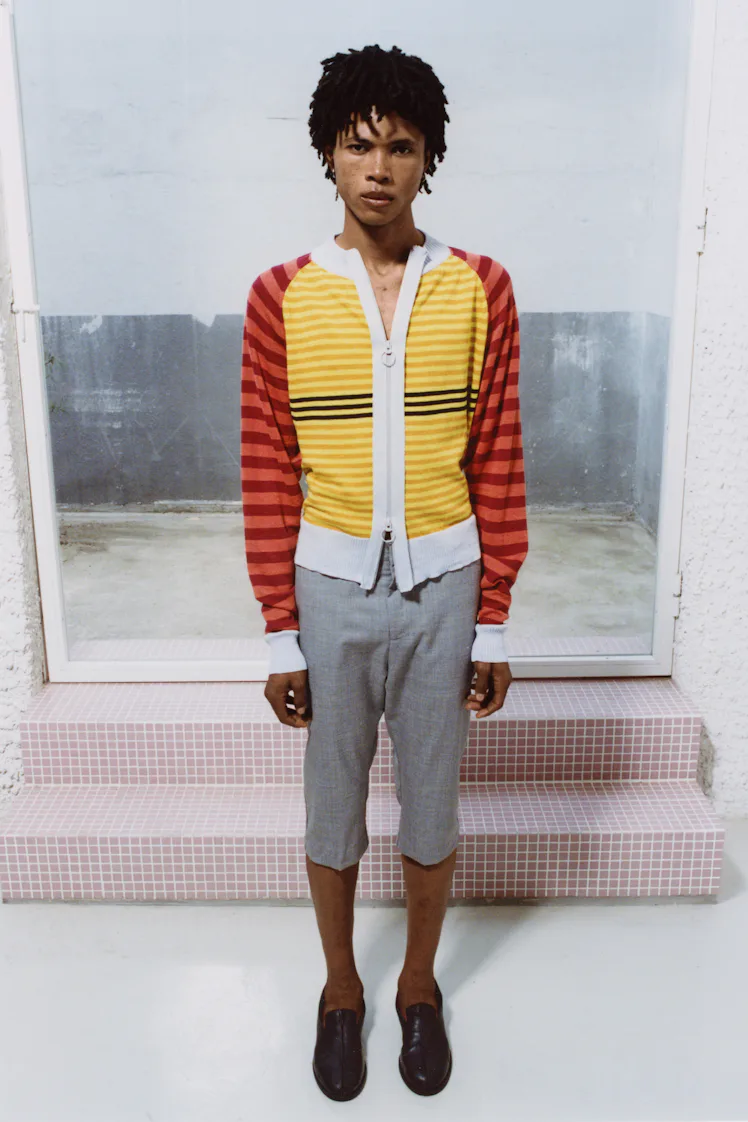
In the last three years with AI on the rise, it’s harder to find pieces that feel like they’ve touched human hands.
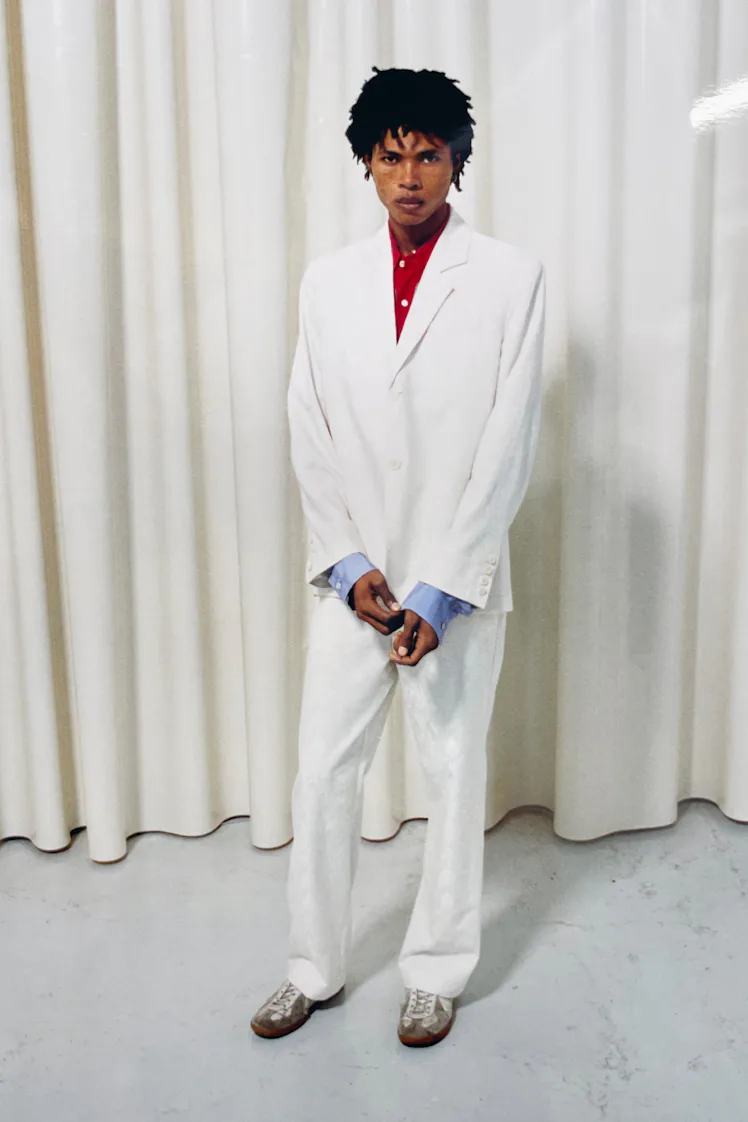
I try to understand what pieces really need, and what their purpose is. I need it to have a certain level of structural integrity for that to make sense, obviously. I think shirts are really interesting because even if it’s falling apart a little bit, or there’s holes in it, or it’s washed and ripped a bit more than it should have, that can be really sexy, charming, and show a great deal of personality. I’m a bit more free up top, if that makes sense. It is a balance. If it’s too scraggly and too punky, it can feel under-considered.
It’s also about finding interesting ways for finishing to have more longevity. How can we fray this but then have it actually last? Sometimes it’s more work to make it that way than if you were to make it in a regular way, but it’s a sensibility we’re always developing. We spend a lot of time on finishings and understanding how to get the hand right. If we ever work with a new factory for production, it’s a long process to get them where we want them to be in terms of hand-finishing things, which is why a lot of the pieces will still pass through our own atelier before heading out to stores. I’m a control freak with that kind of thing.
I feel like the label of menswear or womenswear matters less and less. Do those labels matter to you? Buyers still care about that distinction, and there are distinctions in body proportions, but are you actively thinking about the split between the two during the design process?
We look at it as menswear and womenswear for exactly the reason you’ve just said, mainly in proportions and pattern development, which is a super boring technical answer. On a philosophical level, I think because it was a menswear brand at the beginning that it is falling into that category. Right now I would say it’s 50/50 split. We’re in a lot of women’s-only stores. I think if anything, it’s more of a women’s brand because most of the menswear is bought by women as well. They’ve got even more of an offering, weirdly.
I design both. Of late, my process has been more women first, because I think we had a strong base of what the men’s looks were. I treat it as two sides to the business, but I want them always to be presented together and looked at as a whole. I think that relationship is important. The co-ed relationship is the only way I can see the brand communicating. It allows us to be precise with what we’re saying in any season. Usually, we’re presenting 25 to 30 looks, and there’s a pretty even split down the middle. If we can’t say it in 12 looks, we’ve got to reevaluate what we’re doing at our scale.
What are your hopes for the brand five years from now?
I want us to keep going, but I have a whole lot of benchmarks. What I’m most excited about is starting to plan some in-person shopping experiences in countries where we have a following that’s growing. I want to start visiting more places and connecting with the client. We did our first pop-up last year in Madrid, and it was so wonderful to be around the people buying clothes. I think — especially because I’m based in Madrid, we’re not really in a fashion capital — that people don’t know the brand, and I’m always surprised when they do and they own pieces and they want to own more. That’s a big focus for the next couple of years, to start taking that to cities around the world and giving them our version of that experience. We have amazing partners around the world, but I’m interested in defining what that looks like from our brand’s perspective. And yeah, I think that’s probably enough. I mean, I’ve got so many others, but let’s not put that in writing.
